
How Noise Powers AI Image Generation in Diffusion Models
Explore how noise functions as the foundation of diffusion models in AI image generation, and learn how to identify AI-generated content with detection tools.
Introduction to Diffusion Models and Noise
Artificial intelligence has transformed digital imagery, enabling the creation of hyper-realistic visuals from simple text prompts. At the heart of this revolution are diffusion models, a class of generative AI that powers tools like DALL-E, Midjourney, and Stable Diffusion. Unlike traditional AI models, diffusion models rely on a unique process where noise plays a central role. Understanding this mechanism is key to grasping how AI-generated images are created—and how they can be detected.
In this article, we’ll break down:
- What diffusion models are and how they work
- The critical role of noise in the generation process
- How noise patterns can reveal AI-generated content
- Practical methods for verifying image authenticity
What Are Diffusion Models?
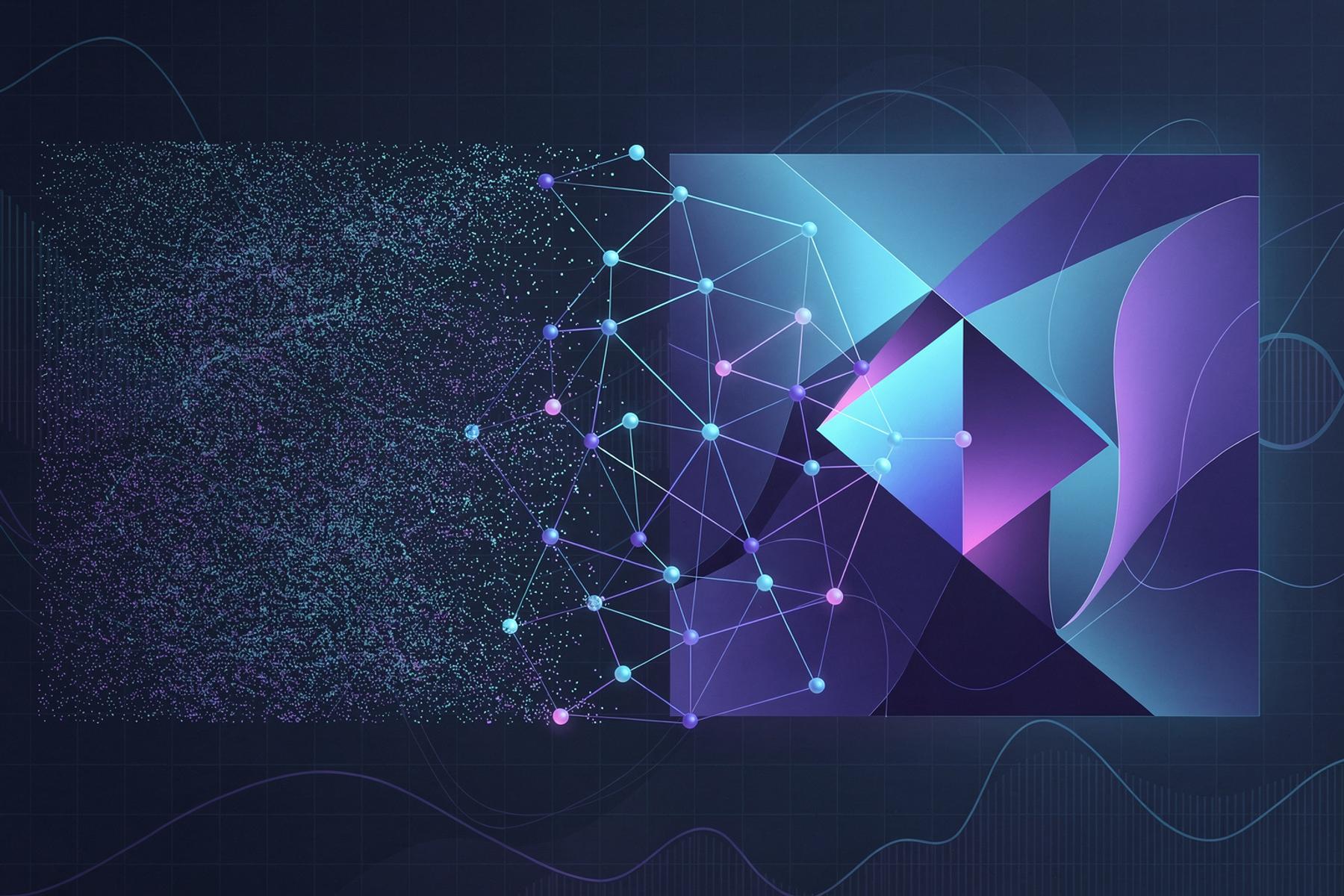
Diffusion models are a type of generative AI that creates images by gradually transforming random noise into coherent visuals. The process mimics the way heat diffuses through a medium or how ink disperses in water—hence the name. These models have gained popularity due to their ability to produce high-quality, diverse images with remarkable detail.
How Diffusion Models Work: A Step-by-Step Overview
-
Forward Process (Adding Noise)
- The model starts with a real image and gradually adds Gaussian noise (random pixel variations) over multiple steps.
- This process continues until the image is reduced to pure noise, indistinguishable from static.
-
Reverse Process (Denoising)
- The AI learns to reverse this noise addition, step-by-step reconstructing an image from the noisy input.
- During training, the model refines its ability to predict and remove noise, eventually generating new images from random noise alone.
-
Image Generation
- To create a new image, the model starts with pure noise and applies the learned denoising process.
- Guided by a text prompt (e.g., “a sunset over mountains”), the AI shapes the noise into a coherent image that matches the description.
This two-phase approach—noise addition followed by noise removal—is what makes diffusion models so powerful. However, it also leaves behind subtle traces that can be used to identify AI-generated content.
The Role of Noise in AI Image Generation
Noise isn’t just a byproduct of diffusion models—it’s the raw material from which images are built. Here’s why noise is essential:
1. Noise as the Starting Point
- Every AI-generated image begins as a random noise pattern, similar to television static.
- The model’s job is to iteratively refine this noise into a structured image based on the input prompt.
2. Noise Scheduling: Controlling the Process
- Diffusion models use a noise schedule to determine how much noise is added or removed at each step.
- Early steps introduce more noise, while later steps focus on fine details.
- This scheduling ensures the model doesn’t overfit to specific patterns, allowing for diverse outputs.
3. Noise and Creativity
- The randomness of noise enables diffusion models to generate unique variations of the same prompt.
- For example, prompting “a cat sitting on a couch” will produce different results each time due to the initial noise differences.
4. Noise Artifacts: The Tell-Tale Signs
- While diffusion models are highly effective, they sometimes struggle to fully remove noise, leaving behind subtle artifacts.
- These artifacts can include:
- Unnatural textures (e.g., overly smooth surfaces or repetitive patterns)
- Blurring in fine details (e.g., hair, fur, or intricate backgrounds)
- Inconsistent lighting or shadows
- Distortions in complex structures (e.g., hands, text, or architectural elements)
These imperfections are often invisible to the naked eye but can be detected by specialized tools like Detect AI Image.
Why Noise Matters for Detecting AI-Generated Images
The noise-based nature of diffusion models creates both opportunities and challenges for image authenticity verification. Here’s how noise plays a role in detection:
1. Noise Patterns as Fingerprints
- AI-generated images often retain residual noise patterns that differ from those in real photos.
- Real images typically have noise introduced by camera sensors, which follows specific statistical distributions.
- AI-generated noise, however, may exhibit unnatural uniformity or repetitive structures.
2. Denoising Artifacts
- The denoising process can leave behind subtle inconsistencies, such as:
- Over-smoothed areas where fine details are lost
- Unnatural transitions between objects and backgrounds
- Repetitive pixel patterns that don’t occur in nature
3. Tools for Noise Analysis
- Advanced AI detection tools, like Detect AI Image, analyze these noise patterns to determine if an image is AI-generated.
- These tools compare the noise in an image against known patterns from real and AI-generated sources, providing a confidence score for authenticity.
Practical Methods for Identifying AI-Generated Images
While diffusion models are becoming increasingly sophisticated, there are several ways to spot AI-generated content:
1. Manual Inspection Techniques
- Check for Unnatural Details: Look for overly smooth textures, blurry edges, or repetitive patterns.
- Examine Lighting and Shadows: AI-generated images often struggle with consistent lighting.
- Inspect Complex Structures: Hands, text, and intricate backgrounds are common failure points.
- Look for Noise Artifacts: Zoom in to check for unnatural pixel patterns or distortions.
2. Using AI Detection Tools
- Tools like Detect AI Image provide a quick and reliable way to verify image authenticity.
- Simply upload an image, and the tool analyzes it for AI-generated noise patterns, providing a confidence score.
- This is particularly useful for:
- Educators verifying student submissions
- Journalists fact-checking images for news stories
- Content creators ensuring their work isn’t mistaken for AI-generated content
3. Metadata Analysis
- AI-generated images often lack EXIF metadata (camera settings, timestamps, etc.) found in real photos.
- However, metadata can be easily manipulated, so this method should be used alongside other techniques.
4. Reverse Image Search
- Tools like Google Reverse Image Search can help determine if an image is widely circulated online, which may indicate AI generation.
- However, this method isn’t foolproof, as some AI-generated images are unique.
The Future of Noise in Diffusion Models
As diffusion models evolve, so too will the role of noise in AI image generation. Here’s what to expect:
1. Improved Noise Handling
- Future models will likely reduce noise artifacts, making AI-generated images even harder to detect.
- This will require more advanced detection methods, such as analyzing higher-order statistical patterns.
2. Hybrid Models
- Some researchers are exploring hybrid models that combine diffusion with other generative techniques (e.g., GANs) to improve image quality.
- These models may introduce new types of noise patterns, further complicating detection.
3. Ethical Considerations
- As AI-generated content becomes more prevalent, transparency and labeling will be crucial.
- Tools like Detect AI Image will play a key role in maintaining trust in digital media.
Conclusion
Noise is the invisible foundation of diffusion models, enabling AI to transform randomness into stunning visuals. While this technology has unlocked incredible creative potential, it also presents challenges for image authenticity verification. By understanding how noise functions in AI image generation, we can better identify AI-generated content and make informed decisions about the images we encounter.
For those who need a reliable way to verify image authenticity, tools like Detect AI Image offer a free and accessible solution. Whether you’re an educator, journalist, or content creator, staying informed about AI-generated content is essential in today’s digital landscape.
FAQs
What is Gaussian noise in diffusion models?
Gaussian noise is a type of random variation added to an image during the forward process of diffusion models. It follows a normal distribution, meaning most pixel changes are small, with fewer large deviations. This noise is gradually added until the image becomes pure static.
Why do AI-generated images sometimes look blurry?
Blurriness in AI-generated images often occurs due to over-smoothing during the denoising process. The model may struggle to reconstruct fine details, resulting in areas that appear soft or out of focus.
Can AI-generated images be detected with 100% accuracy?
No. AI detection is probabilistic, meaning tools like Detect AI Image provide confidence scores rather than absolute answers. As AI models improve, detection will become more challenging, making it important to use multiple verification methods.
How can I use Detect AI Image to verify an image?
Using Detect AI Image is simple:
- Visit the website.
- Upload the image you want to analyze.
- Wait a few seconds for the tool to process the image.
- Review the confidence score and detailed analysis to determine if the image is likely AI-generated.
What industries benefit most from AI image detection tools?
Several industries rely on AI image detection for content validation and authenticity verification, including:
- Education: Ensuring academic integrity by verifying student submissions.
- Journalism: Fact-checking images for news stories.
- Social Media: Identifying misinformation and deepfakes.
- E-commerce: Verifying product images for authenticity.
- Research: Studying the prevalence of AI-generated content.