
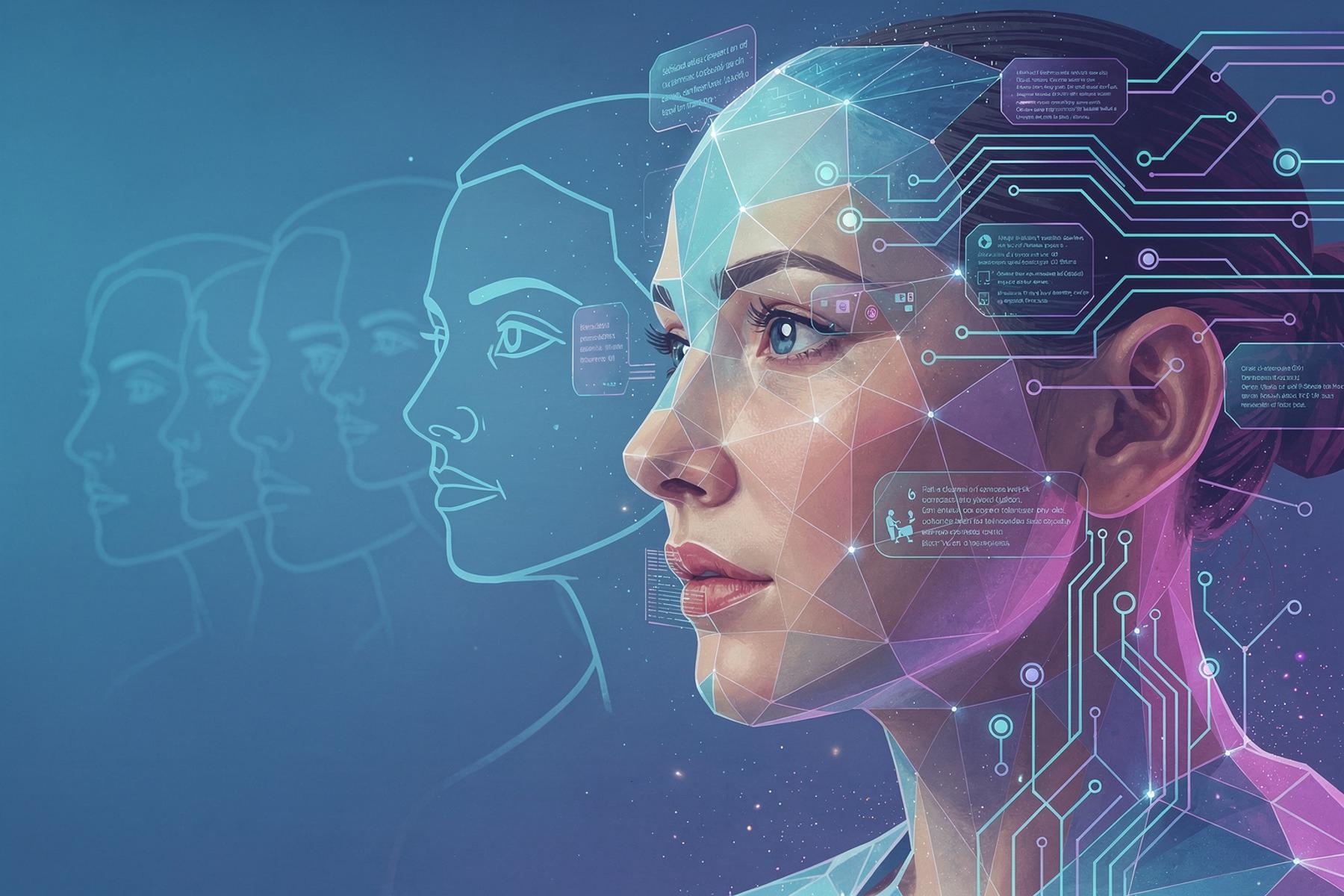
How AI Models Process Faces and Why It Matters
Explore how AI models generate and process human faces, the challenges they face, and why understanding this matters for digital authenticity.
Understanding AI’s Approach to Human Faces
Artificial intelligence has made remarkable strides in generating realistic human faces. From deepfake videos to AI-generated profile pictures, synthetic faces are becoming increasingly common—and increasingly difficult to distinguish from real ones. But how exactly do AI models process and create human faces? And why does this matter for digital authenticity?
The Basics: How AI Generates Faces
AI models, particularly those using generative adversarial networks (GANs) or diffusion models, create faces through a multi-step process:
-
Training on Massive Datasets
- AI models are trained on thousands (or millions) of real human faces.
- These datasets include diverse ethnicities, ages, expressions, and lighting conditions.
- Popular datasets include FFHQ (Flickr-Faces-HQ) and CelebA.
-
Learning Patterns and Features
- The AI identifies common facial structures: symmetry, proportions, and key features like eyes, nose, and mouth.
- It learns how these features interact—for example, how a smile affects the eyes or how lighting creates shadows.
- The model also captures subtler details like skin texture, wrinkles, and hair patterns.
-
Generating New Faces
- Once trained, the AI can generate entirely new faces by combining learned patterns.
- For example, it might merge the eyes from one face, the nose from another, and the skin tone from a third.
- Advanced models like DALL·E 3, Midjourney, and Stable Diffusion refine this process to create highly realistic results.
-
Refining Outputs
- AI models use feedback loops to improve realism. In GANs, one network generates faces while another critiques them, pushing the generator to create more convincing outputs.
- Diffusion models, like those used in Stable Diffusion, gradually refine noise into a coherent image through iterative steps.
Common Flaws in AI-Generated Faces
Despite their sophistication, AI models still struggle with certain aspects of facial generation. These flaws can serve as telltale signs of AI-generated content:
1. Symmetry and Proportions
- AI often overemphasizes facial symmetry, leading to unnaturally perfect faces.
- Real human faces are rarely perfectly symmetrical—subtle differences between the left and right sides are normal.
- Example: An AI-generated face might have eyes that are too aligned or a nose that’s too centered.
2. Eyes and Ears
- Eyes: AI models frequently struggle with the complexity of eyes. Common issues include:
- Unnatural reflections or glints in the eyes.
- Asymmetrical or mismatched pupils.
- Blurred or distorted irises.
- Eyelashes that appear painted on or lack individual strands.
- Ears: AI often generates ears that are misshapen, misplaced, or lack fine details like the inner ear structure.
3. Teeth and Smiles
- AI-generated smiles can look unnatural, with teeth that are:
- Too uniform in size and shape.
- Blurred or fused together.
- Missing gaps or unique dental features (e.g., crooked teeth).
- Example: A smile where all teeth are identical, like a row of perfect white blocks.
4. Hair and Skin Texture
- Hair: AI often struggles with hair realism, resulting in:
- Strands that look like a solid mass rather than individual hairs.
- Unnatural patterns, such as repetitive curls or waves.
- Hair that appears to “float” or lacks roots.
- Skin: AI-generated skin may lack texture, appearing too smooth or plastic-like. It might also miss details like pores, freckles, or natural blemishes.
5. Background and Context
- AI models often generate faces in isolation, leading to:
- Blurry or inconsistent backgrounds.
- Unnatural lighting or shadows that don’t match the face.
- Objects (e.g., glasses, hats) that appear distorted or poorly integrated.
6. Emotional Expressions
- AI-generated faces can struggle with conveying genuine emotions. Common issues include:
- Overly exaggerated expressions (e.g., a smile that looks forced).
- Inconsistent emotions (e.g., happy eyes with a neutral mouth).
- Lack of micro-expressions, which are subtle and fleeting in real humans.
Why Facial Processing Matters
Understanding how AI models process faces is crucial for several reasons, particularly in an era where synthetic content is pervasive:
1. Digital Authenticity and Trust
- AI-generated faces are increasingly used in social media profiles, marketing campaigns, and even news articles.
- Without proper verification, these faces can deceive audiences, erode trust, and spread misinformation.
- Example: A fake LinkedIn profile using an AI-generated face could be used for scams or social engineering attacks.
2. Academic Integrity
- Students and researchers may use AI-generated faces in presentations, papers, or creative projects.
- Educators need tools to verify the authenticity of submitted work, ensuring academic honesty.
- Example: A student submitting an AI-generated portrait as part of an art assignment could undermine the learning process.
3. Journalism and Fact-Checking
- Journalists must verify the authenticity of images used in news stories, especially in sensitive or high-stakes contexts.
- AI-generated faces can be used to create fake personas or manipulate public opinion.
- Example: A viral image of a “missing person” could be entirely AI-generated, leading to wasted resources or public panic.
4. Content Moderation
- Social media platforms and online communities rely on content moderation to prevent the spread of synthetic media.
- AI-generated faces can be used to create fake accounts, spam, or deepfake content.
- Example: A bot network using AI-generated profile pictures to spread disinformation during an election.
5. Legal and Ethical Considerations
- The use of AI-generated faces raises questions about consent, privacy, and intellectual property.
- For example, can an AI-generated face infringe on the likeness of a real person?
- Legal frameworks are still evolving to address these challenges.
How to Spot AI-Generated Faces
While AI-generated faces are becoming more realistic, there are still ways to identify them manually:
Manual Detection Techniques
- Check for Symmetry: Look for unnaturally perfect symmetry in the face, especially around the eyes, nose, and mouth.
- Examine the Eyes: Look for unnatural reflections, mismatched pupils, or blurred irises.
- Inspect the Teeth: AI-generated smiles often have teeth that are too uniform or lack individual details.
- Analyze Hair and Skin: Look for unnatural patterns in hair or overly smooth skin that lacks texture.
- Assess the Background: AI-generated faces often have blurry or inconsistent backgrounds.
- Evaluate Emotional Expressions: Check for exaggerated or inconsistent emotions, such as a smile that doesn’t reach the eyes.
Using AI Detection Tools
Manual detection can be time-consuming and unreliable, especially as AI models improve. Tools like Detect AI Image provide a more efficient and accurate way to verify image authenticity. Here’s how it works:
- Upload the Image: Simply upload the image you want to analyze.
- Instant Analysis: The tool scans the image for patterns and artifacts commonly found in AI-generated content.
- Confidence Score: Receive a confidence score indicating the likelihood that the image is AI-generated.
- Detailed Report: Some tools provide a breakdown of specific areas where AI artifacts were detected (e.g., eyes, hair, background).
Practical Example
Imagine you’re a journalist verifying a profile picture for a news story. The image appears highly realistic, but you notice:
- The eyes have an unnatural reflection.
- The teeth in the smile are too uniform.
- The background is slightly blurred.
Using Detect AI Image, you upload the photo and receive a confidence score of 85%, indicating it’s likely AI-generated. This prompts you to seek additional verification before publishing the story.
The Future of AI-Generated Faces
As AI models continue to evolve, so too will their ability to generate realistic faces. Here’s what to expect in the coming years:
Advancements in AI Technology
- Improved Realism: Future AI models will generate faces with even fewer artifacts, making them harder to detect.
- Example: Better handling of hair, skin texture, and emotional expressions.
- Customization: AI models will allow for more granular control over facial features, enabling users to generate faces with specific traits.
- Real-Time Generation: AI will generate faces in real-time for applications like video calls or virtual avatars.
The Role of Detection Tools
As AI-generated faces become more sophisticated, detection tools will need to adapt:
- Continuous Learning: Detection tools must be regularly updated to keep pace with advancements in AI generation.
- Multi-Modal Analysis: Future tools may combine image analysis with metadata, behavioral data, or other signals to improve accuracy.
- Collaboration: Detection tools, AI developers, and policymakers will need to work together to establish standards for AI-generated content.
Ethical and Regulatory Developments
- Labeling Requirements: Governments and platforms may require AI-generated content to be labeled as such.
- Consent and Privacy: Legal frameworks will need to address the use of AI-generated faces, particularly when they resemble real individuals.
- Transparency: AI developers may be required to disclose the datasets and methods used to train their models.
Conclusion
AI models have made significant progress in generating realistic human faces, but their limitations—such as unnatural symmetry, flawed eyes, and inconsistent backgrounds—still provide clues for detection. Understanding how AI processes faces is essential for maintaining digital authenticity, whether you’re a journalist verifying sources, an educator ensuring academic integrity, or a social media user navigating an increasingly synthetic online world.
While manual detection techniques can be helpful, tools like Detect AI Image offer a more reliable and efficient way to verify image authenticity. As AI technology continues to advance, staying informed and using the right tools will be key to navigating the challenges and opportunities of AI-generated content.
For more insights into AI image detection and digital authenticity, explore the resources available at Detect AI Image.