
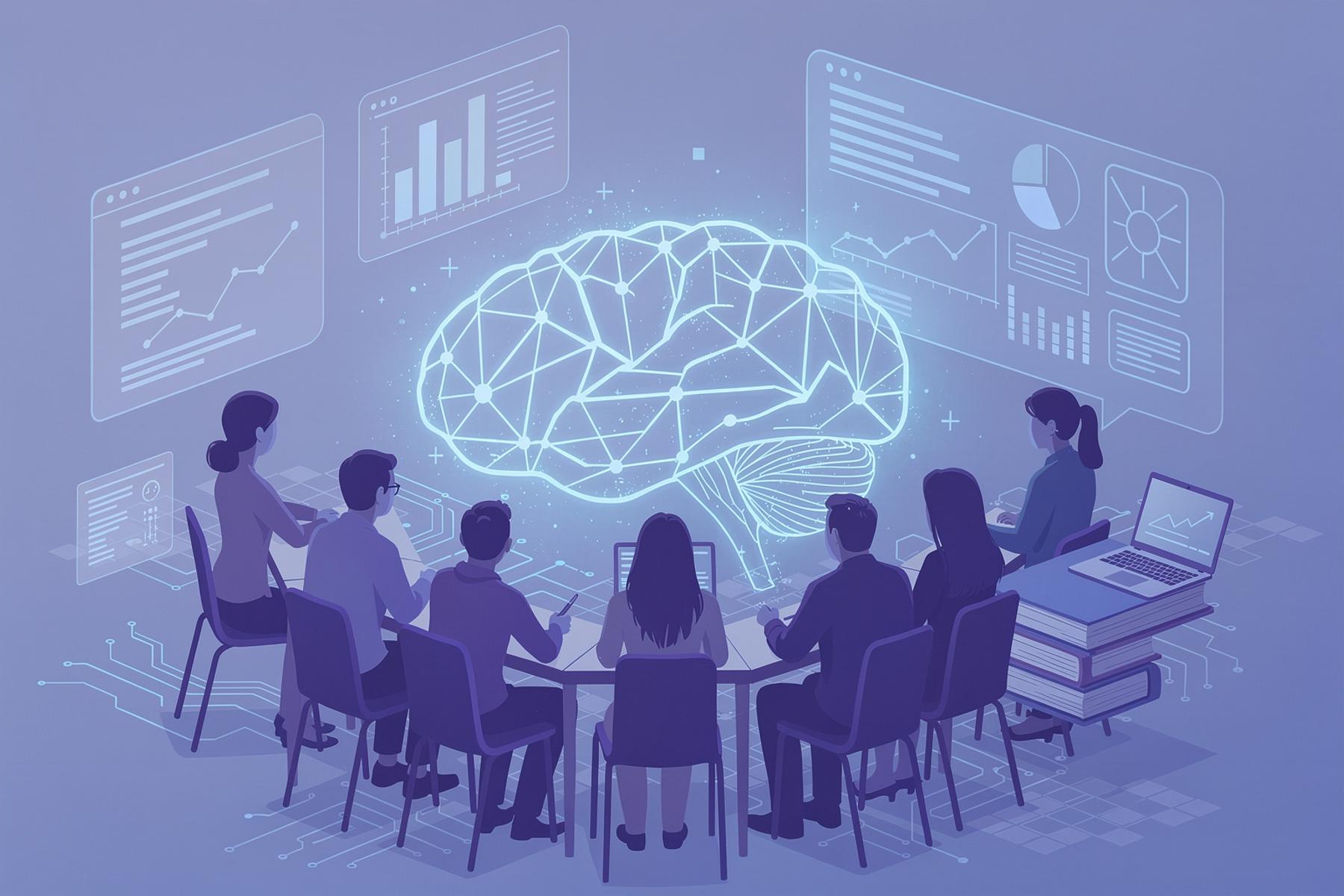
Why AI Literacy Belongs in Modern Education
Explore why AI literacy is essential for students and educators, and how it prepares learners for an AI-driven world while maintaining academic integrity.
In an era where artificial intelligence is reshaping industries, communication, and creativity, the ability to understand and interact with AI-generated content is no longer optional—it’s a fundamental skill. Just as students learn to evaluate sources for credibility or fact-check information, they must now develop AI literacy to navigate a digital landscape where AI-generated images, text, and media are increasingly indistinguishable from human-created content. Integrating AI literacy into modern education isn’t just about keeping up with technology; it’s about preparing students to be informed, critical thinkers in a world where AI plays a growing role in everyday life.
The Rise of AI-Generated Content in Education
AI-generated content is already pervasive in educational settings, whether educators and students realize it or not. From AI-created artwork submitted as assignments to deepfake videos circulating on social media, the lines between human and machine-generated content are blurring. Consider these scenarios:
- A student submits a “hand-drawn” illustration for an art project, but it was actually generated using Midjourney or DALL-E.
- A viral image shared in a history class, purportedly depicting a historical event, turns out to be an AI fabrication.
- A research paper includes AI-generated text that sounds plausible but contains factual inaccuracies.
These examples highlight why AI literacy is critical. Without the tools and knowledge to identify AI-generated content, students and educators risk misinformation, plagiarism, and a erosion of trust in digital media. AI literacy empowers learners to:
- Verify the authenticity of images, videos, and text.
- Understand the limitations of AI-generated content, such as biases or inaccuracies.
- Use AI ethically as a tool for creativity and learning, rather than deception.
- Develop critical thinking skills to question and analyze digital content.
Why AI Literacy Matters for Students
1. Academic Integrity in the Age of AI
Academic integrity has always been a cornerstone of education, but AI-generated content introduces new challenges. Tools like Detect AI Image can help educators verify whether an image was created by a student or generated by AI, but students also need to understand why this matters. AI literacy teaches students:
- The ethical implications of passing off AI-generated work as their own.
- How to use AI as a brainstorming or drafting tool, rather than a shortcut.
- The importance of transparency when incorporating AI-generated content into assignments.
For example, a student might use an AI image generator to create a concept for a science project but should disclose its use and explain how they refined or built upon the AI’s output. This approach fosters honesty while encouraging creativity.
2. Preparing for the Future Workforce
AI is transforming industries, from healthcare to marketing to journalism. Students who graduate with AI literacy will be better equipped to:
- Collaborate with AI tools in their future careers, whether as designers, writers, or data analysts.
- Identify AI-generated content in professional settings, such as verifying the authenticity of images in journalism or marketing.
- Understand the ethical considerations of AI use in their fields, such as bias in AI-generated content or the impact of automation on jobs.
For instance, a future journalist might use AI detection tools to verify the authenticity of images in a news story, ensuring that their reporting is accurate and trustworthy. Similarly, a marketer might use AI-generated images for campaigns but must understand the legal and ethical implications of doing so.
3. Combating Misinformation and Deepfakes
AI-generated content isn’t just a challenge for educators—it’s a societal issue. Deepfakes, AI-generated images, and synthetic media can spread misinformation, manipulate public opinion, and even influence elections. AI literacy helps students:
- Recognize common signs of AI-generated images, such as unnatural lighting, distorted backgrounds, or repetitive patterns.
- Use verification tools like Detect AI Image to analyze suspicious content.
- Develop a healthy skepticism toward viral content, especially on social media.
For example, a student might encounter a viral image on social media claiming to show a “rare weather phenomenon.” By applying AI literacy skills, they can question the image’s authenticity, verify its source, and avoid spreading misinformation.
How Educators Can Teach AI Literacy
Integrating AI literacy into the curriculum doesn’t require a complete overhaul of existing lesson plans. Instead, educators can incorporate AI awareness into subjects they already teach. Here are some practical strategies:
1. Start with the Basics: How AI Works
Before students can identify AI-generated content, they need to understand how AI works. Educators can:
- Explain the basics of AI image generation, such as how tools like DALL-E or Midjourney create images from text prompts.
- Discuss the differences between AI-generated content and human-created content, such as the lack of emotional depth or contextual understanding in AI.
- Show examples of AI-generated images alongside human-created ones, highlighting the subtle differences.
2. Teach Hands-On Verification Skills
Students learn best by doing. Educators can incorporate hands-on activities that teach students how to verify the authenticity of digital content:
- Use AI detection tools: Introduce students to tools like Detect AI Image, which analyzes images to determine whether they were generated by AI. Have students upload images and interpret the results, discussing the tool’s confidence scores and limitations.
- Reverse image searches: Teach students how to use tools like Google Reverse Image Search to trace the origin of an image and verify its authenticity.
- Analyze metadata: Show students how to check an image’s metadata for clues about its origin, such as the date it was created or the software used.
3. Incorporate AI Literacy Across Subjects
AI literacy isn’t just for computer science classes—it can be integrated into a variety of subjects:
- Art and Design: Have students compare AI-generated artwork with human-created pieces, discussing the creative process and ethical considerations of using AI in art.
- Journalism and Media Studies: Teach students how to verify the authenticity of images and videos in news stories, using real-world examples of deepfakes or AI-generated misinformation.
- History and Social Studies: Discuss the impact of AI-generated content on historical narratives, such as how deepfakes could be used to manipulate public perception of past events.
- Science and Technology: Explore the role of AI in scientific research, such as how AI-generated images are used in medical imaging or climate studies.
4. Encourage Ethical Discussions
AI literacy isn’t just about technical skills—it’s also about ethics. Educators can facilitate discussions about the responsible use of AI, such as:
- Plagiarism and academic integrity: What constitutes plagiarism when using AI-generated content? How can students use AI ethically in their work?
- Bias in AI: How do biases in training data affect the output of AI-generated content? What are the implications for representation and fairness?
- The future of creativity: Can AI-generated art be considered “real” art? How might AI change creative industries?
The Role of AI Detection Tools in Education
While AI literacy involves a broad range of skills, tools like Detect AI Image play a practical role in helping educators and students verify the authenticity of images. Here’s how these tools can be used in educational settings:
1. Maintaining Academic Integrity
Educators can use AI detection tools to verify whether student-submitted artwork or images were created by AI. This isn’t about “catching” students in the act of cheating—it’s about fostering a culture of transparency and honesty. For example:
- A teacher might use Detect AI Image to analyze an image submitted for an art project. If the tool indicates a high likelihood of AI generation, the teacher can discuss the results with the student and explore the ethical implications of using AI in creative work.
- In a journalism class, students might use the tool to verify the authenticity of images in news articles, learning how to fact-check visual content.
2. Teaching Critical Thinking
AI detection tools can be a starting point for deeper discussions about digital literacy. For instance:
- Understanding confidence scores: Tools like Detect AI Image provide a confidence score rather than a definitive answer. Educators can use this as an opportunity to teach students about probability, uncertainty, and the limitations of technology.
- Comparing results: Have students analyze the same image using multiple verification methods (e.g., AI detection tools, reverse image searches, metadata analysis) and compare the results. This teaches them that no single tool is foolproof and that critical thinking is essential.
3. Encouraging Responsible AI Use
AI detection tools can also help students understand the ethical use of AI. For example:
- Transparency: If a student uses AI-generated images in a project, they should disclose its use and explain how they incorporated it. AI detection tools can help educators verify this transparency.
- Avoiding misinformation: Students can use these tools to verify images before sharing them on social media, helping to combat the spread of misinformation.
Challenges and Considerations
While AI literacy is essential, integrating it into education comes with challenges. Educators and policymakers must address these considerations:
1. Keeping Up with Rapidly Evolving Technology
AI is advancing at a breakneck pace, and detection tools must evolve alongside it. Educators need to:
- Stay informed about the latest developments in AI image generation and detection.
- Update their teaching materials regularly to reflect new tools and techniques.
- Collaborate with technology experts to ensure their curriculum remains relevant.
2. Balancing AI Use and Human Creativity
There’s a fine line between using AI as a tool and relying on it too heavily. Educators must:
- Encourage students to use AI as a supplement to their creativity, not a replacement.
- Teach students to critically evaluate AI-generated content and refine it with their own ideas.
- Foster an appreciation for human creativity and the unique perspectives that only humans can bring.
3. Addressing Privacy and Ethical Concerns
AI detection tools, like all technology, raise privacy and ethical questions. Educators should:
- Choose tools that prioritize user privacy, such as Detect AI Image, which analyzes images securely without storing them.
- Discuss the ethical implications of AI use with students, including issues like bias, consent, and the potential for misuse.
- Ensure that AI literacy programs are inclusive and accessible to all students, regardless of their technical background.
The Future of AI Literacy in Education
As AI becomes more integrated into our daily lives, AI literacy will become as essential as reading, writing, and arithmetic. The future of AI literacy in education might include:
- Standardized AI literacy curricula: Schools may adopt standardized programs that teach students how to interact with AI responsibly, similar to existing digital literacy initiatives.
- AI ethics courses: Universities and high schools could offer courses dedicated to the ethical implications of AI, covering topics like bias, privacy, and the future of work.
- Collaborative learning: Students might work alongside AI tools in the classroom, learning how to leverage AI for creativity, research, and problem-solving.
- Global AI literacy initiatives: Governments and organizations could launch initiatives to promote AI literacy worldwide, ensuring that all students have access to these critical skills.
Conclusion
AI literacy is no longer a niche skill—it’s a necessity for students and educators alike. By integrating AI literacy into modern education, we can prepare students to navigate an AI-driven world with confidence, critical thinking, and ethical awareness. Whether it’s verifying the authenticity of an image with tools like Detect AI Image, understanding the limitations of AI-generated content, or using AI responsibly in their work, students equipped with AI literacy will be better prepared for the challenges and opportunities of the future.
For educators, the message is clear: AI literacy isn’t just about keeping up with technology—it’s about empowering students to be informed, ethical, and creative participants in a digital world. By embracing AI literacy today, we can help shape a future where technology serves humanity, not the other way around.