
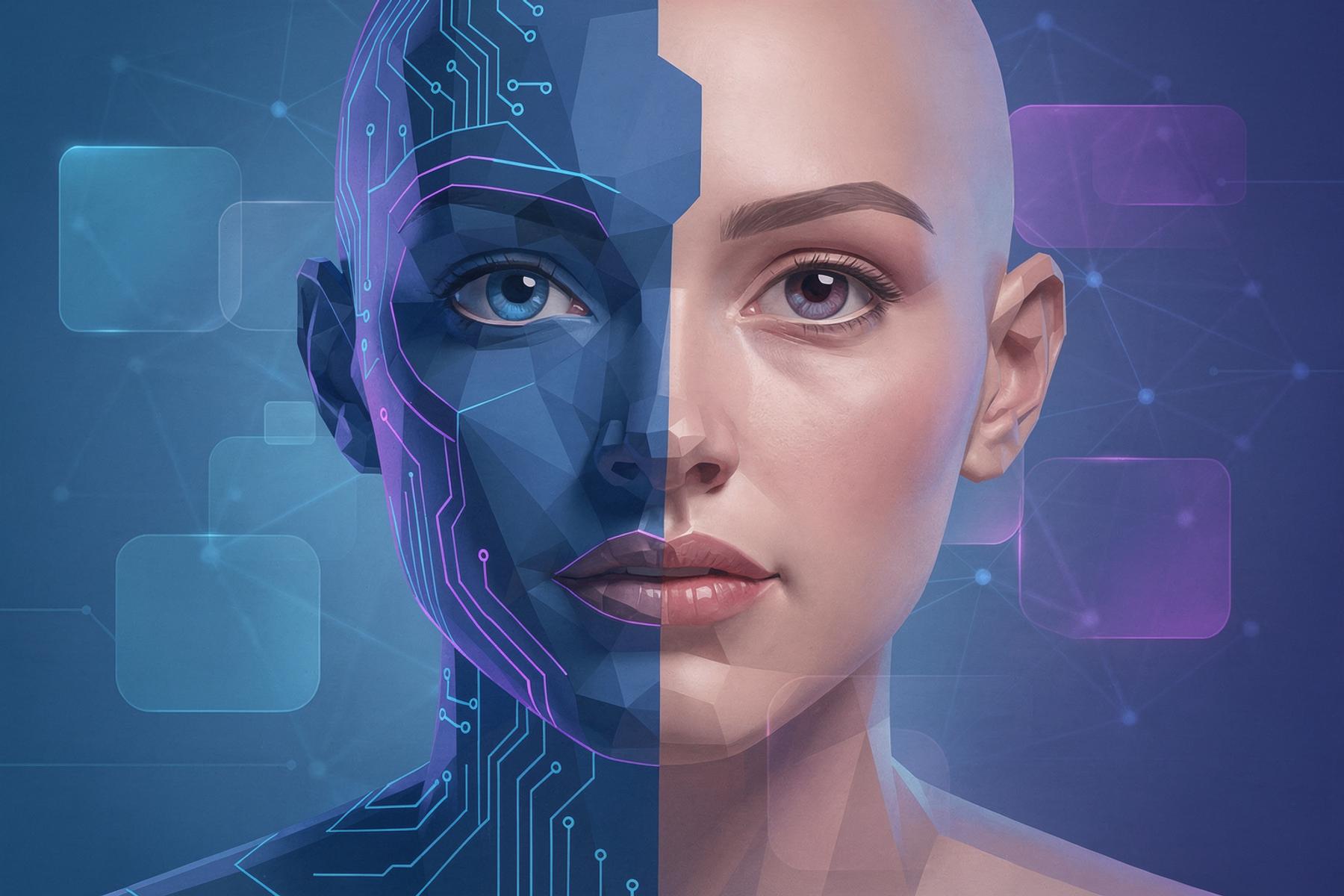
Why Some AI Images Are Hard to Identify
Explore the reasons behind the growing challenge of distinguishing AI-generated images from real photos, and how tools like Detect AI Image can help verify authenticity.
In recent years, AI-generated images have evolved from blurry, surreal experiments to highly realistic visuals that can easily pass for photographs. This rapid advancement has made it increasingly difficult for even trained eyes to distinguish between AI-generated content and authentic images. Understanding why some AI images are hard to identify is crucial for educators, journalists, content creators, and anyone concerned with digital authenticity. Below, we explore the key factors contributing to this challenge and how tools like Detect AI Image can assist in verification.
The Evolution of AI Image Generation
AI image generators like Midjourney, DALL-E, and Stable Diffusion have undergone significant improvements in a short span of time. Early versions of these tools produced images with noticeable flaws—distorted faces, unnatural lighting, or surreal compositions. However, modern iterations leverage advanced machine learning techniques to create visuals that are nearly indistinguishable from real photos. Here’s how AI image generation has evolved:
-
Higher Resolution: Early AI images were often low-resolution, making artifacts and inconsistencies more visible. Today, AI tools can generate high-resolution images that rival professional photography.
-
Improved Realism: AI models are now trained on vast datasets of real images, enabling them to replicate textures, lighting, and shadows with remarkable accuracy.
-
Better Contextual Understanding: Modern AI can interpret complex prompts and generate images that align closely with human expectations. For example, an AI can now create a realistic portrait of a person in a specific setting, complete with accurate reflections and depth.
-
Reduced Artifacts: Early AI images often contained telltale signs like blurry edges, repetitive patterns, or unnatural proportions. While these artifacts still exist, they are far less obvious in newer models.
These advancements mean that AI-generated images are no longer confined to abstract or fantastical subjects. They can now mimic real-world scenes, people, and objects with alarming precision.
Why AI Images Are Hard to Identify
Several factors contribute to the difficulty of identifying AI-generated images. Below, we break down the most significant challenges:
1. Lack of Obvious Flaws
In the past, AI-generated images often contained glaring errors, such as:
- Distorted hands or fingers: Extra digits, unnatural poses, or missing details.
- Unrealistic backgrounds: Blurry or inconsistent scenery that didn’t match the subject.
- Inconsistent lighting: Shadows or reflections that didn’t align with the light source.
While these flaws still occur, they are far less frequent in modern AI models. For example, an AI-generated portrait might now include perfectly rendered hands, realistic skin textures, and accurate lighting—making it nearly indistinguishable from a photograph.
2. Training on Diverse Datasets
AI image generators are trained on massive datasets containing millions of real images. This diversity allows them to replicate a wide range of styles, subjects, and compositions. For instance:
- Faces: AI can generate faces of people from different ethnicities, ages, and genders with high accuracy.
- Landscapes: AI can recreate natural scenes like forests, oceans, and mountains with realistic textures and colors.
- Objects: Everyday items, such as cars, furniture, or food, can be rendered with lifelike detail.
The breadth of these datasets means that AI can generate images that align with our expectations of what “real” looks like, reducing the likelihood of obvious inconsistencies.
3. Adaptive Learning and Refinement
AI models are not static; they continuously improve through feedback loops. When users interact with AI-generated images—whether by refining prompts, upvoting realistic outputs, or providing corrections—the models learn and adapt. This iterative process leads to:
- Fewer artifacts: AI models become better at avoiding common flaws like distorted objects or unnatural proportions.
- More coherent compositions: AI can now generate images with balanced compositions, realistic perspectives, and accurate depth.
- Improved contextual understanding: AI can better interpret prompts and generate images that align with the intended subject matter.
For example, an AI-generated image of a bustling city street might now include realistic traffic, pedestrians, and architectural details, making it harder to spot as synthetic.
4. Human Bias and Expectations
Our brains are wired to trust what we see, especially when an image aligns with our expectations. This cognitive bias makes it easier for AI-generated images to deceive us. For instance:
- Familiar subjects: If an AI generates an image of a common object, like a dog or a tree, we are less likely to scrutinize it for flaws.
- Emotional appeal: AI-generated images that evoke strong emotions—such as a heartwarming family scene or a breathtaking landscape—are more likely to be accepted as real without question.
- Confirmation bias: If an image aligns with our beliefs or expectations, we are more likely to overlook inconsistencies.
This human tendency to trust visual content makes it even more challenging to identify AI-generated images, especially when they are designed to be emotionally compelling.
5. Post-Processing and Editing
AI-generated images can be further refined using traditional editing tools like Photoshop or Lightroom. This post-processing can:
- Remove artifacts: Minor flaws in AI-generated images can be corrected manually.
- Enhance realism: Adjustments to lighting, color, and texture can make an AI image appear more lifelike.
- Add context: Backgrounds, objects, or people can be added or modified to create a more cohesive composition.
For example, an AI-generated portrait might be edited to include realistic hair strands, adjust skin tones, or add natural-looking blemishes. These edits can make the image nearly indistinguishable from a photograph.
Common Signs of AI-Generated Images (And Why They’re Fading)
While AI-generated images are becoming harder to identify, there are still some subtle signs that can help you spot them. However, it’s important to note that these indicators are becoming less reliable as AI technology advances:
1. Unnatural Details
- Eyes: AI-generated faces may have eyes that appear too symmetrical, lack depth, or have unnatural reflections.
- Teeth: Teeth in AI-generated smiles might look too perfect or lack individuality.
- Hair: Strands of hair may appear too uniform or lack natural flow.
Why it’s fading: Modern AI models are better at replicating the complexity of human features, making these details harder to spot.
2. Inconsistent Lighting or Shadows
- Light sources: AI-generated images may have inconsistent lighting, such as shadows that don’t align with the light source.
- Reflections: Reflections in mirrors, water, or glass may appear distorted or unrealistic.
Why it’s fading: AI models are improving at understanding and replicating realistic lighting conditions.
3. Repetitive Patterns
- Textures: AI-generated images may contain repetitive patterns, such as identical leaves on a tree or repeating tiles on a floor.
- Backgrounds: Backgrounds may appear blurry or lack detail, especially in complex scenes.
Why it’s fading: AI models are now better at generating diverse and detailed textures, reducing the likelihood of repetitive patterns.
4. Unnatural Proportions
- Body parts: Hands, feet, or limbs may appear distorted or disproportionate.
- Objects: Everyday objects, like furniture or vehicles, may have unnatural shapes or sizes.
Why it’s fading: AI models are improving at generating anatomically accurate and proportionate images.
5. Metadata and File Properties
- Lack of EXIF data: AI-generated images often lack the metadata (e.g., camera settings, location) found in real photographs.
- File naming conventions: AI-generated images may have generic or nonsensical file names.
Why it’s fading: Metadata can be easily added or modified using editing tools, making this indicator less reliable.
How to Verify Image Authenticity
Given the challenges of identifying AI-generated images manually, using specialized tools can provide a more reliable way to verify authenticity. Detect AI Image is a free online tool designed to help users determine whether an image was generated by AI or created by a human. Here’s how it can assist in the verification process:
1. Upload and Analyze
Detect AI Image allows users to upload any image for instant analysis. The tool examines multiple characteristics of the image, including:
- Patterns and textures: Identifying subtle artifacts or inconsistencies.
- Metadata: Checking for signs of AI generation in the file properties.
- Lighting and shadows: Analyzing the realism of lighting conditions.
2. Receive a Confidence Score
Instead of providing a binary “AI or not AI” result, Detect AI Image offers a confidence score. This score indicates the likelihood that the image was generated by AI, allowing users to make informed decisions based on the level of certainty.
3. Privacy-Focused Analysis
Detect AI Image prioritizes user privacy. Uploaded images are analyzed securely and are not stored or shared, ensuring that sensitive or personal content remains confidential.
4. User-Friendly Interface
The tool is designed to be accessible to users of all technical levels. No expertise is required—simply upload an image and receive instant results.
Practical Use Cases for AI Image Detection
AI image detection tools like Detect AI Image are valuable in a variety of contexts. Here are some practical use cases:
1. Academic Integrity
Educators and academic institutions can use AI detection tools to verify the authenticity of student submissions. For example:
- Art and design courses: Ensuring that students submit original work rather than AI-generated images.
- Research projects: Verifying that images used in academic papers are authentic and properly sourced.
2. Journalism and Fact-Checking
Journalists and media professionals rely on accurate visuals to support their reporting. AI detection tools can help:
- Verify sources: Confirming that images used in news articles are authentic and not AI-generated.
- Combat misinformation: Identifying AI-generated images that may be used to spread false narratives.
3. Content Creation and Moderation
Content creators and platform moderators can use AI detection tools to:
- Ensure originality: Verifying that images used in blogs, social media, or marketing materials are authentic.
- Moderate user-generated content: Identifying and removing AI-generated images that violate platform guidelines.
4. Social Media Authenticity
Social media users can use AI detection tools to:
- Verify viral images: Checking the authenticity of images shared widely on platforms like Twitter, Instagram, or TikTok.
- Protect personal content: Ensuring that images of themselves or their work are not being misrepresented as AI-generated.
5. Research and Analysis
Researchers studying AI-generated content can use detection tools to:
- Track trends: Monitoring the prevalence and evolution of AI-generated images.
- Develop countermeasures: Identifying patterns and artifacts that can improve detection methods.
The Future of AI Image Detection
As AI image generation technology continues to advance, so too must the tools and techniques used to detect AI-generated content. Here are some trends to watch in the field of AI image detection:
1. Improved Detection Algorithms
Detection tools like Detect AI Image are continuously updated to keep pace with advancements in AI image generation. Future algorithms may incorporate:
- Deep learning models: More sophisticated AI models trained to identify subtle artifacts and inconsistencies.
- Real-time analysis: Faster and more accurate detection for use in live content moderation.
2. Collaboration with AI Developers
AI image generators and detection tools may work together to:
- Embed watermarks: AI-generated images could include invisible watermarks or metadata that identify them as synthetic.
- Standardize detection methods: Developing industry-wide standards for AI image detection.
3. User Education and Awareness
As AI-generated images become more prevalent, educating users about the challenges and tools for verification will be essential. This includes:
- Raising awareness: Helping users understand the capabilities and limitations of AI image generation.
- Promoting best practices: Encouraging the use of multiple verification methods for critical decisions.
4. Regulatory and Ethical Considerations
Governments and organizations may introduce regulations or guidelines to address the challenges posed by AI-generated images. This could include:
- Mandatory labeling: Requiring AI-generated images to be clearly labeled as such.
- Ethical guidelines: Establishing best practices for the use of AI-generated content in journalism, academia, and other fields.
Conclusion
The difficulty of identifying AI-generated images stems from rapid advancements in AI technology, improved realism, and our own cognitive biases. While manual detection methods can still be useful, they are becoming less reliable as AI models evolve. Tools like Detect AI Image provide a practical solution for verifying image authenticity, offering users a reliable way to navigate the challenges of AI-generated content.
Whether you’re an educator ensuring academic integrity, a journalist verifying sources, or a social media user checking the authenticity of viral images, understanding the limitations of AI image detection—and using the right tools—can help you make informed decisions in an era of increasingly sophisticated synthetic media.
As AI image generation continues to advance, staying informed and leveraging detection tools will be key to maintaining trust and authenticity in digital content.